
This longer-than-normal post presents only a very brief summary of the two primary takes on the COVID-19 Pandemic and efficacy of the COVID-19 ‘vaccines’ – what can be called the Mainstream (official) narrative and the conspiratorial one. Enjoy.
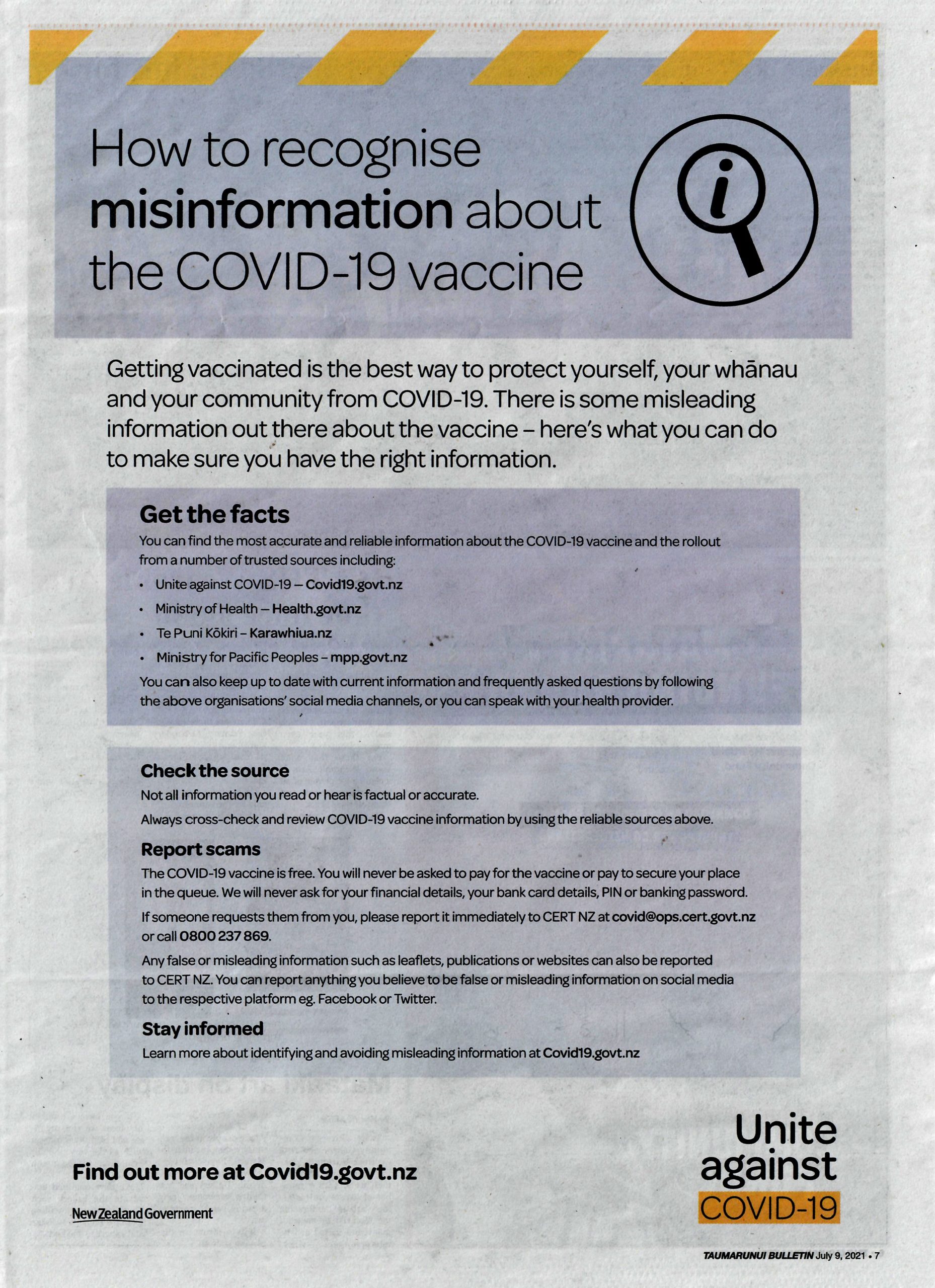
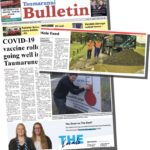
A government sponsored advertisement keeps appearing in our local rag. I followed their advice, went to their website and found no answers to basic COVID vaccine questions but I did find deceptive conduct and serious misinformation presented by the authorities.
Deceptive communications imply things but don’t actually use facts – or like the heading in this newspaper advert that implies something that it simply doesn’t address. Straight talkers however shoot straight. Compare the weasel-words of this advertisement with those of Peter McCullough, professor of medicine & vice chief of internal medicine at Baylor University. He also teaches at Texas A&M University and is an epidemiologist; cardiologist & internist. He is the most widely cited physician in the treatment of COVID-19 with more than 600 citations in the National Library of Medicine.
He’s a top man in the discipline, so-to-speak!
… a form of bioterrorism [worldwide] that appears to be many years in the planning … the first wave [is a] respiratory virus that spread across the world and affected relatively few people [1% that] generated great fear … everything done in response … made it worse … over-testing, lock-downs …
What we found was that the suppression of early treatment was closely linked to the development of a vaccine … phase two of a bio-terrorism operation … delivers to the human body the spike protein, the gain-of-function target of this bio-terrorism research.
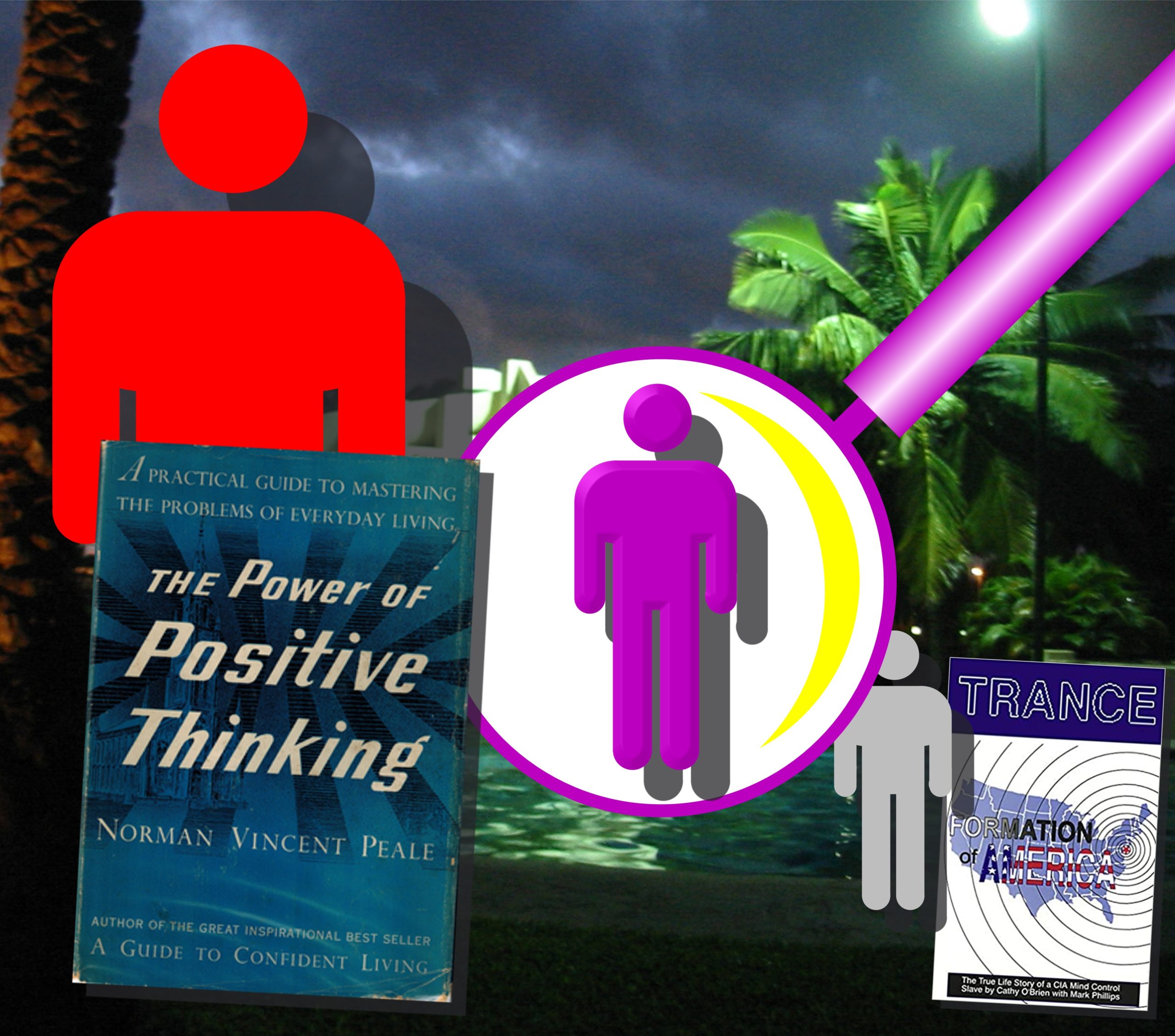
What we had learned over time is that we could no longer communicate with government agencies. We actually couldn’t even communicate with our propagandized colleagues in major medical centers, all of which appear to be under a spell, almost as if they are hypnotized right now.
And doctors, good doctors, are doing unthinkable things, like injecting biologically active messenger RNA that produces this pathological spike protein into pregnant women. I think when the doctors wake up from their trance they’re going to be shocked to think what they’ve done to people.
This is a very, very serious disinformation situation.
So one needs to understand that the CDC and WHO have an agenda. New Zealand’s Prime Minister, “Comrade” Cindy and her team does too. Is a vaccine safe? Is it necessary or is it even a vaccine? Deception can be found in more than one place too . . . do you know the difference between “authorised” and “approved” don’t you? And is “emergency use” criteria really applied? My 90+ year old friend in the Te Kuiti rest home got the jab because everyone else around him did too. I know . . . because he told me. He didn’t want to rock the boat. Sadly, I don’t visit him any more as a result.
So I ‘wandered’ into the NZ officialdom and am still none the wiser a year down the track! Let’s look at NZ’s Medsafe first:
Vaccine assessment and approval in New Zealand
Medsafe is New Zealand’s medicines safety authority. It evaluates applications for all new medicines, including vaccines, to make sure they meet international standards and local requirements.
https://covid19.govt.nz/covid-19-vaccines/vaccine-development-and-safety/how-covid-19-vaccines-are-developed-and-approved/
Medsafe will only recommend a medicine is approved for use in New Zealand if it meets these standards.
The Pfizer vaccine has been provisionally approved (with conditions) for use in New Zealand.
This means it’s been formally approved after a thorough assessment, but Pfizer must give Medsafe ongoing data and reporting to show that it meets international standards.
Medsafe updated their terms in February 2021 and now states that:
Medsafe has not yet finalised all of the methods that we will use to monitor COVID-19 vaccine safety.
https://www.medsafe.govt.nz/COVID-19/monitoring-process.asp
In other words, “trust us”.
I don’t, except when it comes to exercising big-pharma’s well-proven monopolistic power to maximise private profits from the public purse over their patients best interest.

VAERS, the Vaccine Adverse Event Reporting System is a national US public record and is most useful for identifying trends.
The strengths of VAERS are that it is national in scope and can quickly provide an early warning of a safety problem with a vaccine … [but] The number of reports alone cannot be interpreted or used to reach conclusions about the existence, severity, frequency, or rates of problems associated with vaccines.
https://vaers.hhs.gov/data.html
How they can say that the numbers of reported incidents cannot be a reliable source in coming to conclusions but they have just talked about trends [crazy eh?] can best be understood by using a legal mind (they want to protect themselves from legal claims), while normal sound logic fails. Of course an increased number of cases reported SHOULD indeed be an indicator of trends!
In terms of completeness, VAERS reporting is clearly only the tip of the ice-berg:
… Reports vary in quality and completeness. They often lack details and sometimes can have information that contains errors … “Underreporting” is one of the main limitations of passive surveillance systems, including VAERS. The term, underreporting refers to the fact that VAERS receives reports for only a small fraction of actual adverse events … VAERS accepts all reports without judging whether the event was caused by the vaccine.
https://vaers.hhs.gov/data/dataguide.html
In my analysis of the numbers and types of reactions of vaccine adverse reports from VAERS, I found a substantial difference to the NZ government’s claim above that “Getting vaccinated is the best way to protect yourself . . from COVID-19”. This advert reeks of self-interest and a hidden agenda – something that I first observed as a teenager reading an article in the NZ Herald about an event that I had witnessed personally.
Indeed my observations of this hidden agenda were later reinforced when I found that the “safe sex” campaign of the late 1990s was funded by the condom manufacturers (“Well, duh!” you may say) and again in the medical field where I found that the Minister of Health had little influence over his officials and their repeated inaction to affect policy that they did not want applied.
The pattern has repeated ever since, as I’ve found many dozens, if not hundreds of times since as my many investigations have shown major influence of “brain-washing, bribery and blackmail” of decision-makers. (H/T: RDS for that perceptive and accurate phrase).
VAERS maintains this database and I downloaded 1.2Gb of data going back decades and analysed it. The most recent database broke my spreadsheet software, stopping at a smidgen over 400k records but this is the type of thing I found, and my analysis of reported events. Clearly something not very good is going down out there!
Baby had regular 6 week wellness check-up and received all reccomended vaccinations for 6 week old baby. Straight after vaccination baby went to sleep, he then woke up 1 hour after with a screaming cry as if something was terribly wrong, he then started vomiting uncontrollably (like a water fountain) and was in and out of consciousness, very lethargic, breathing started to reduce drastically, baby was floppy. Baby was handed to paramedics and rushed to emergency. After event of vaccine reaction, doctors encouraged to continue with vaccinations, baby was continuously in and out of hospital, suffered from stomach problems/pain as a todler and would notice todler seeking anything cold, usually resulting to lying down on stomach on the cold floor because stomach was always burning hot. He would vomit regularly, suffer from regular nose bleeds for no apparent reason, behavioural/anger issues were displayed, headaches, asthma, and dry skin.
Great, just great eh? A kid getting his vaccination by intelligent, aware and caring parents that had his best interests at heart? Nah! I doubt it.
12pm Received shot 1 pm Sore arm at injection site 8pm loss of appetite, whole arm hurting 11pm fever 101, severe chills, body ache, tiredness 11:30pm-3am fever 103.6, chills, body ache, tiredness, headache, confusion, sore on right side of body, high blood pressure161/96, high heart rate 120?s while resting, slighty sob (O2 low 90?s) slight chest pain on right side under Rib front and back, nausea, tingling lips for about 5 mins maybe. 12-30-20 3am still had fever 101 after taking Tylenol, blood pressure and heart rate decreased a little, chills stopped, was able to sleep 7am fever was 102 nausea headache sore right arm Headache and Fever 102 continued all day, fever was a little lower taking Tylenol 12-31-20 Had headache/pressure in head all day temp 98.6-100 all day, felt a lot better, right arm still a little sore
And it continues, on and on and on and on for hundreds of thousands more and more and more . . .
So the database has gone through the roof with this last year’s reporting:

And what does the medical boffin say about this data? Here’s Peter McCullough again:
The federal Vaccine Adverse Event Reporting System [VAERS] logged 5,993 reports of deaths of people injected with the COVID vaccine between Dec. 14, 2020, and June 11, 2021.
Another quoted source
That’s more than all the deaths reported to VAERS from all other vaccines combined over the last 22 years!
But these numbers just don’t scratch the surface of the actual number of dead Americans, according to McCullough.
We have now a whistleblower inside the CMS, and we have two whistleblowers in the CDC. We think we have 50,000 dead Americans. Fifty thousand deaths. So we actually have more deaths due to the vaccine per day than certainly the viral illness by far. It’s basically propagandized bioterrorism by injection.
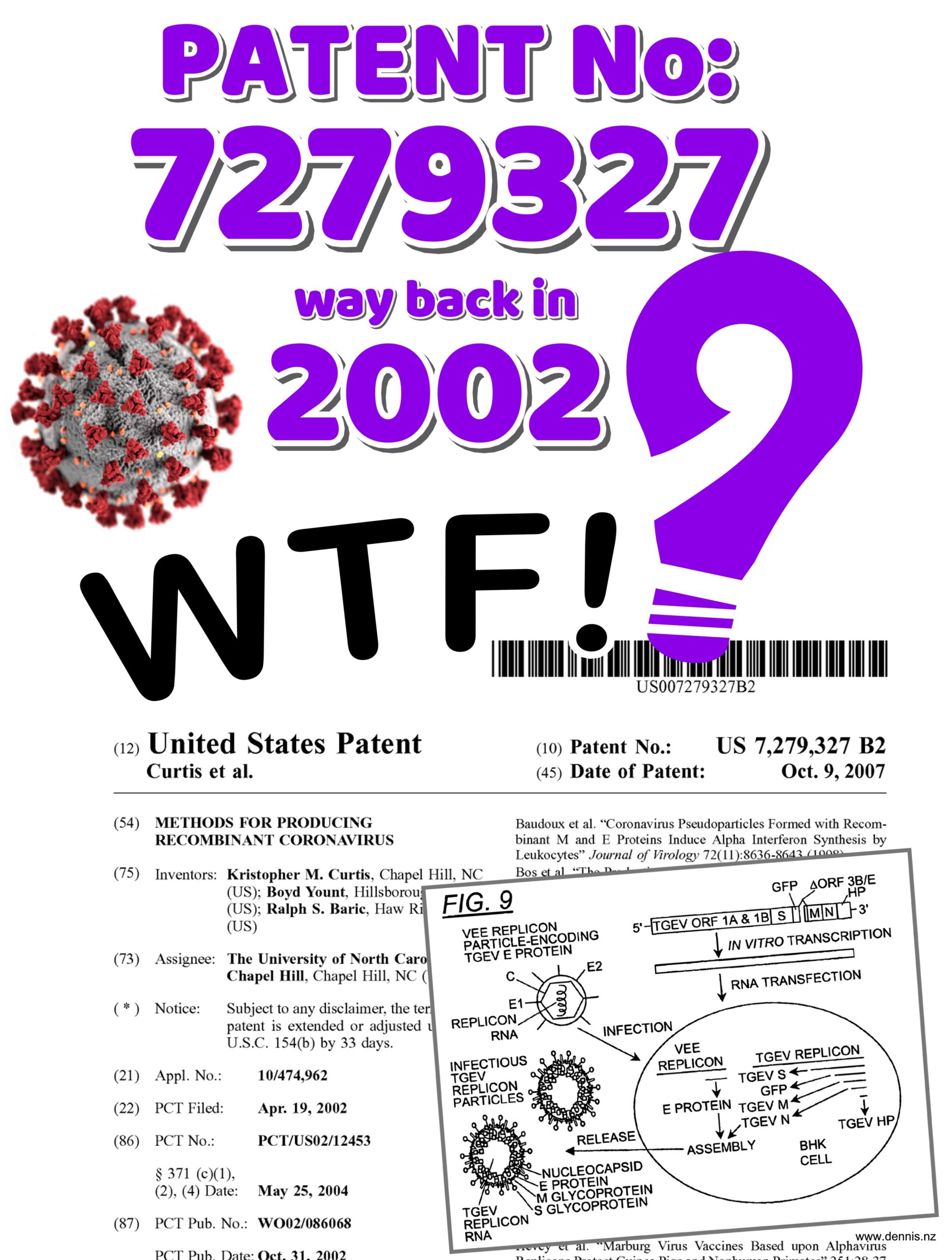
The PCR test is a fraud
Christian Drosten & Olfert Landt founders of the PCR test have serious ethical questions. In just one of [now] thousands of questioners, a German report summarises:
CONCLUSIONS:
Fatal mispredictions, numerous unexplained inconsistencies regarding his doctoral thesis, a hastily developed “SARS-CoV-2 PCR test” with fundamental scientific flaws, and an unsuspected quagmire of financial entanglements, deprive Christian Drosten of any credibility.
https://principia-scientific.com/christian-drosten-the-fraud-behind-covid-19-pcr-testing/
If the central key figure in the entire Corona crisis turns out to be untrustworthy upon closer examination, then this raises serious questions:
1. On the basis of this unscientific foundation, must not the entire Corona events with the inevitable threat of economic and financial collapse of entire nations finally be investigated for those pulling the strings and profiteers in the background?
2.Might it not therefore amount to a staged takeover and even lead to the introduction of digital surveillance of entire nations under the pretext of fighting a pandemic?
3. Why do the mass media responsible for critical reporting fail to reveal the “Drosten file”, why do they keep it under wraps?
The Corona Virus has never been isolated, its protein sequences has never been demonstrated or validated. It’s very hard to validate a cure for something that you don’t actually know what it is or that it even exists!
Wikipedia is a great measurement tool and you can see the key subjects of concern to those with vested interests in their debunking, fact checking efforts: https://en.wikipedia.org/wiki/COVID-19_misinformation. For truthseekers and the aware, Wikipedia’s pro NWO agenda indicates subjects of their concerns.
























































[…] to the NZ Government, there is a lot of misinformation out there . . . so trust us! We are encouraged to trust the government peddled narrative with very little by way of actual […]